
Recognizing Emotional Distress Before It Derails You
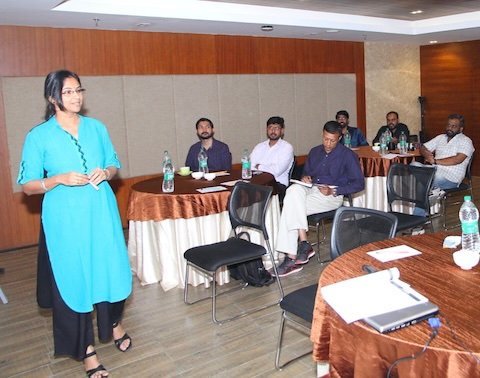
My reflections from the Mental Health Day 2025 Talk at Prachodana
When I was invited to speak at the Mental Health Talk Series hosted by Prachodana Perumbavoor, I knew I didn’t want to just “speak” about mental health—I wanted to hold up a mirror for every listener and help them recognize the warning signs in their own lives… before things spiral.
As a Behaviour Sculptor and NLP Master Practitioner, I’ve spent years working with people across age groups—and I can tell you this:
Emotional derailment doesn’t always announce itself with drama. Most times, it begins in silence.
🌪️ It Starts with a Whisper
Our bodies are incredible. They can survive major shocks.
Our psyche? It’s just as powerful—but also incredibly subtle.
It speaks to us in signs… not shouts.
What if we trained ourselves to pause and ask:
“What’s my self-talk like today?”
“Are my thoughts helping me… or hurting me?”
“Is this emotion a passing wave or a persistent fog?”
Because the truth is, if we don’t notice the early signals—exhaustion, isolation, emotional reactivity—we end up treating symptoms instead of preventing breakdowns.
🔺 Real-Life Warning Signs
Let me share an example from my counselling sessions.
A mother once came to me distraught about her teenage son. Over three years, he had slowly disconnected from everything—no friends, no interaction, no hygiene, no motivation. He would come out only to eat, stayed glued to his phone, and once even held his mother down by her hair just to keep her seated near him.
This wasn’t “just a phase”. These were red flags waving furiously—but unnoticed.
So I encourage you to watch for:
- Constant irritability or mood swings
- Aggression without trigger
- Loss of interest in things once loved
- Sleeping too much or thinking obsessively
- Neglecting basic self-care
The key is not to panic—but to pay attention.
🧠 How NLP Has Helped Me & My Clients
Over the years, I’ve turned to Neuro Linguistic Programming (NLP) techniques to help clients reframe their stories and respond instead of react.
Here are a few simple practices I recommend:
🗣️ “Say, See, Feel” Affirmation
When you’re trying to overcome an emotional block, don’t just say it—see it and feel it.
NLP teaches that the brain responds to multiple layers of encoding.
When you speak an affirmation, visualize it, and feel it—you create a lasting neural pathway.
👁️ Become the Observer
If you’re overwhelmed, try stepping out of your current emotional identity.
Pretend you’re watching yourself like a character in a film.
What would a wise stranger say to you?
This shift in perspective helps reduce emotional charge and invites objectivity.
🎵 Mood Management: State Shifting
Your emotional state is fluid—it can be changed.
When I’m coaching, I often ask, “Ee mood ee?” (“What’s this mood?”)
Then I invite my clients to do something small that shifts energy:
- Put on your favourite music
- Take a walk
- Call someone who makes you laugh
- Do a small win-task and reward yourself
This creates an instant dopamine release, helping break low-energy cycles.
📅 Routines, Boundaries, and Reward
We talk about discipline like it’s punishment. But it’s not.
Structure isn’t rigidity—it’s relief.
Especially for children and teens, I recommend:
- Daily routines for sleep, meals, movement
- Limiting phone usage, with boundaries they understand
- Rewarding consistent effort, not just achievement
When you have a container for your energy, life doesn’t feel so overwhelming.
🌊 Let It Flow. This Too Shall Pass.
One thought I left the audience with was this:
Be like the plants in a riverbed.
Don’t resist the water. Bend. Sway. Flow.
When life feels heavy or unfair, remember—nature doesn’t play favourites.
We all go through difficult seasons. The ones who stay grounded are those who don’t resist the pain—they move with it.
Another simple yet powerful practice?
Don’t react immediately.
Take 5 seconds. Breathe. Respond with awareness.
🔍 Self-Check is Self-Love
At the end of the day, awareness is the best medicine.
Check in with yourself daily.
Observe your thoughts.
Calibrate your responses.
And give yourself grace.
Prevention is not passive—it’s intentional self-compassion.
🟣 Want to Learn How to Catch the Signs Early?
If my session or this article resonated with you, maybe it’s time we had a conversation.
If you’re ready to explore how NLP can help you build awareness, emotional resilience, and clarity of thought…
👉 Book your free 15-minute strategy call with me today. Let’s talk about how we can shift your patterns—before they become problems.
Because you deserve to feel whole, grounded, and free.


Leave a Reply